Hotel interiors are experienced by two very different groups. Guests notice comfort, atmosphere, cleanliness, navigation, and visual character. Hotel teams think about housekeeping, maintenance, storage, service movement, durability, and operational efficiency.
Successful Hotel Interior Designing Services need to address both perspectives.
For hospitality properties in Nagpur, where hotels may serve business travellers, families, wedding guests, tourists, and event visitors, interior planning should reflect the intended customer segment and operational model.
Guest Experience Begins Before the Room
A guest forms impressions from the moment they enter the property.
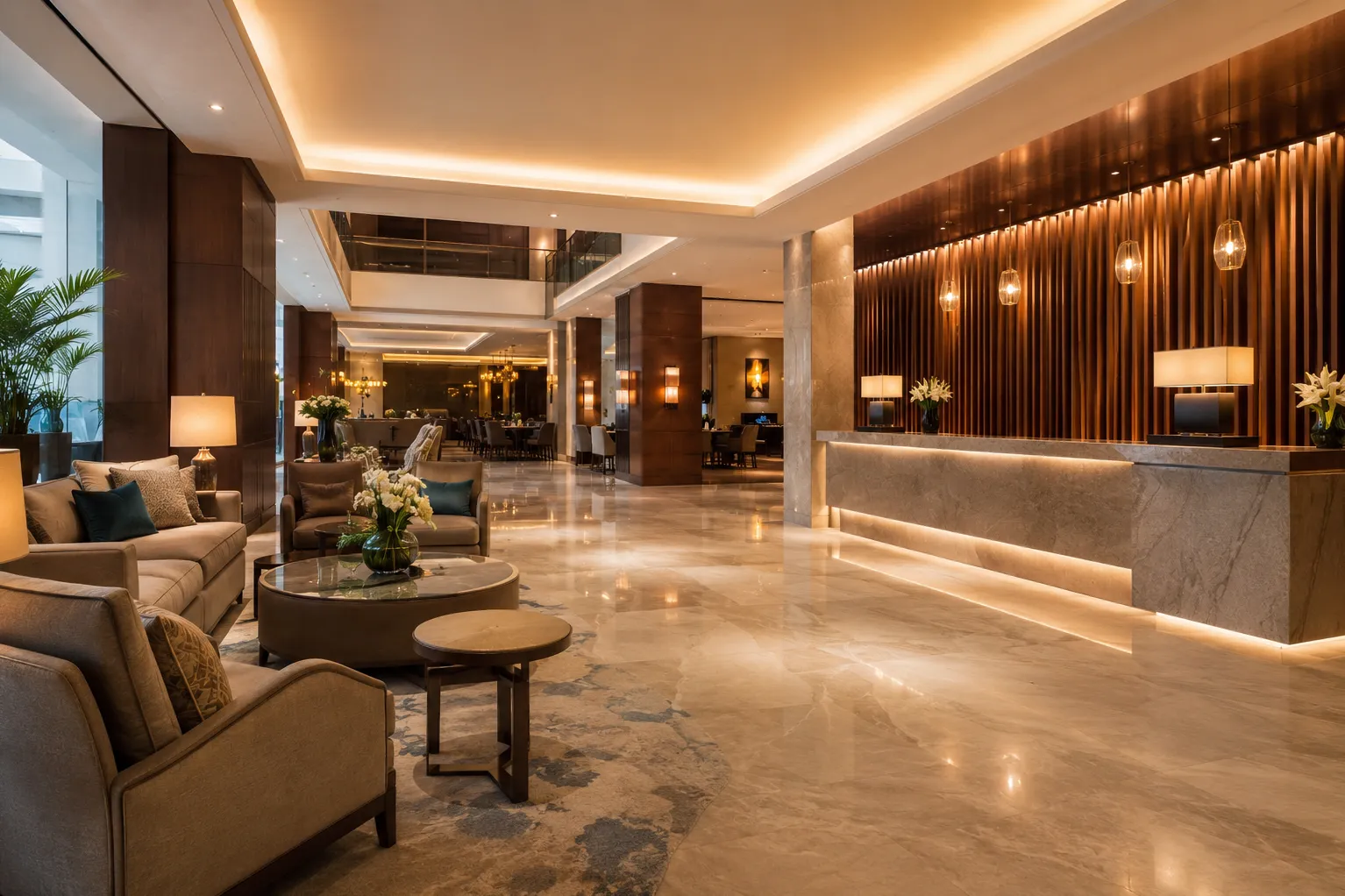
Reception visibility, luggage movement, waiting areas, lighting, signage, seating, and circulation all influence the arrival experience.
The lobby should look appropriate for the hotel's positioning, but it must also support check-in, visitor movement, staff activity, and peak-hour demand.
Guest Rooms Need Functional Consistency
Hotel rooms have to accommodate several activities within limited space.
Guests may need to sleep, work, store luggage, charge devices, dress, watch television, and use the bathroom comfortably.
Important considerations include:
- Bed positioning
- Bedside charging points
- Luggage space
- Wardrobe accessibility
- Work surface
- Lighting controls
- Bathroom movement
- Mirror placement
- Housekeeping access
Small usability problems become more noticeable when repeated across dozens of rooms.
Durability Changes Material Selection
A finish suitable for a private home may not be appropriate for a hotel.
Hotel surfaces experience frequent cleaning, luggage movement, continuous occupancy, and repeated handling. Furniture, flooring, wall finishes, fabrics, hardware, and sanitary fixtures should therefore be evaluated for their expected use.
Maintenance access is equally important.
An attractive feature that is difficult to clean, repair, or replace can increase operational effort.
Lighting Should Reflect Different Hotel Zones
Hotels contain spaces with very different functions.
Guest rooms need comfortable general and task lighting. Corridors require clear visibility. Restaurants may need adjustable ambience. Reception areas need both atmosphere and practical illumination.
Exterior and entrance lighting can also contribute to visibility and arrival experience.
Good Hotel Interior Designing Services coordinate these requirements instead of applying one lighting approach throughout the property.
Design Should Support Local Climate
Nagpur's hot climate places additional emphasis on indoor comfort.
Window treatments, glazing considerations, shading, material selection, air-conditioning coordination, and entrance planning can all influence how comfortable interior spaces feel.
The design should also consider Maharashtra's applicable building and safety requirements based on the nature and scale of the property.
Operational Input Is Valuable
Before finalizing layouts, hotel operators should provide input on housekeeping procedures, linen movement, food service, storage, maintenance, staff circulation, and guest handling.
This can reveal requirements that are easy to overlook during purely visual design discussions.
Empower Infra supports interior, architectural, and construction-related projects in Nagpur, allowing design decisions to be considered alongside practical execution requirements.
Evaluate Interiors as a Business Asset
Hotel interiors contribute to brand perception, but expenditure should be directed intelligently.
Guest-facing areas with strong influence on experience may justify different design priorities from service areas. Meanwhile, durable materials can help reduce frequent replacement in high-use zones.
The objective is not simply to create impressive photographs.
A successful hotel interior should help guests feel comfortable while allowing employees to operate the property efficiently. When aesthetics, durability, maintenance, circulation, and guest expectations are considered together, interior design becomes part of the hotel's operational strategy rather than decoration alone.
Keywords